
Most collections of political ad examples come from presidential and Senate races. The ads below are Facebook and Instagram ads we made in 2026 for State Assembly and town supervisor campaigns, which is where most candidates run. Each one has notes on what it does well.
If you're getting ready to run ads for your own race, there's a pre-launch checklist at the end.
What the Best Political Social Ads Have in Common
Good political ads on Facebook and Instagram look different from each other, but they tend to get the same basics right:
- They read in a couple of seconds. One headline in large type, and only as many words as a phone screen can carry.
- The candidate is in the ad. A real photo of the candidate, ideally in the district, does more than a logo on a color field.
- Each ad has one job. An introduction, a record, an endorsement, or a reminder, not all four at once.
- The series looks like one campaign. The same colors, type, and layout across every ad, so each one builds on the last.
- Dates are on the ad when they matter. In the final weeks, early voting and Election Day dates go on persuasion ads as well as reminders.
- The disclaimer is handled. A paid-for-by disclaimer set up in Meta, and on the image itself where state rules call for it.
Political Social Ad Examples
Demond Meeks: Promises Made, Promises Kept
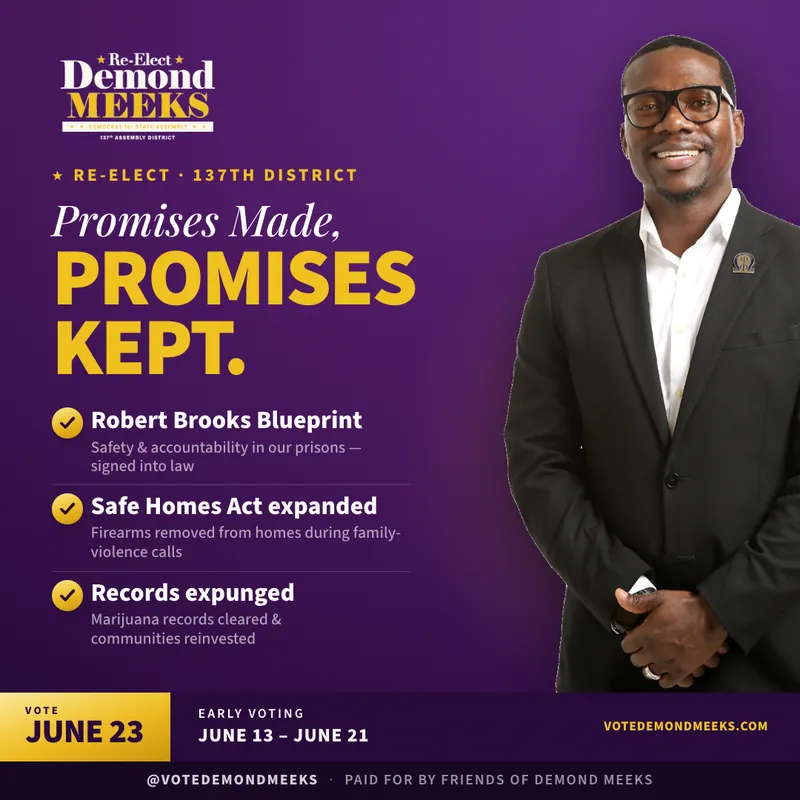
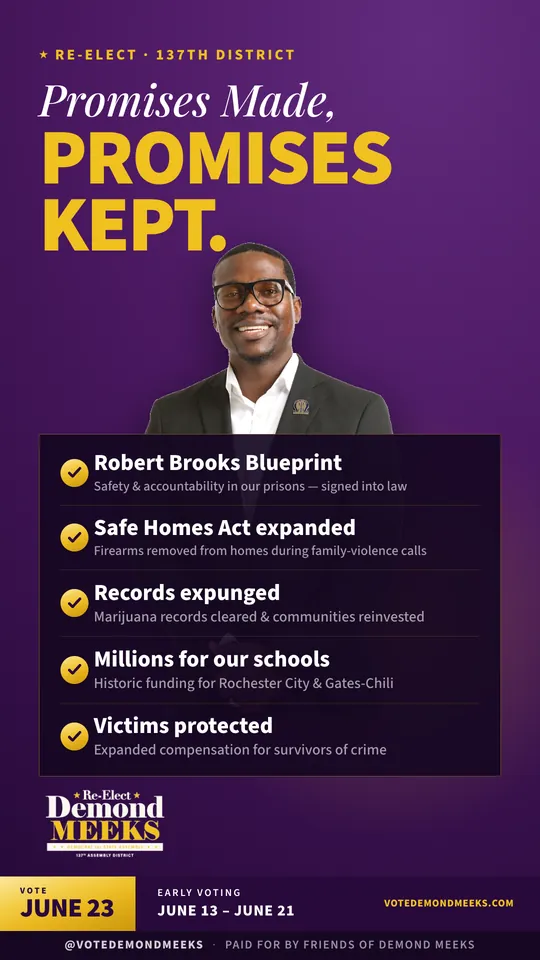
What works: The ad turns a legislative record into three short checklist items under a two-line headline, with his portrait carrying the right side. The voting dates sit in a fixed band along the bottom, and the paid-for-by line is printed on the image. The story version uses the extra height for five items instead of three, in the same order and style, rather than cropping the square.
Demond Meeks: Bill Tracker Series
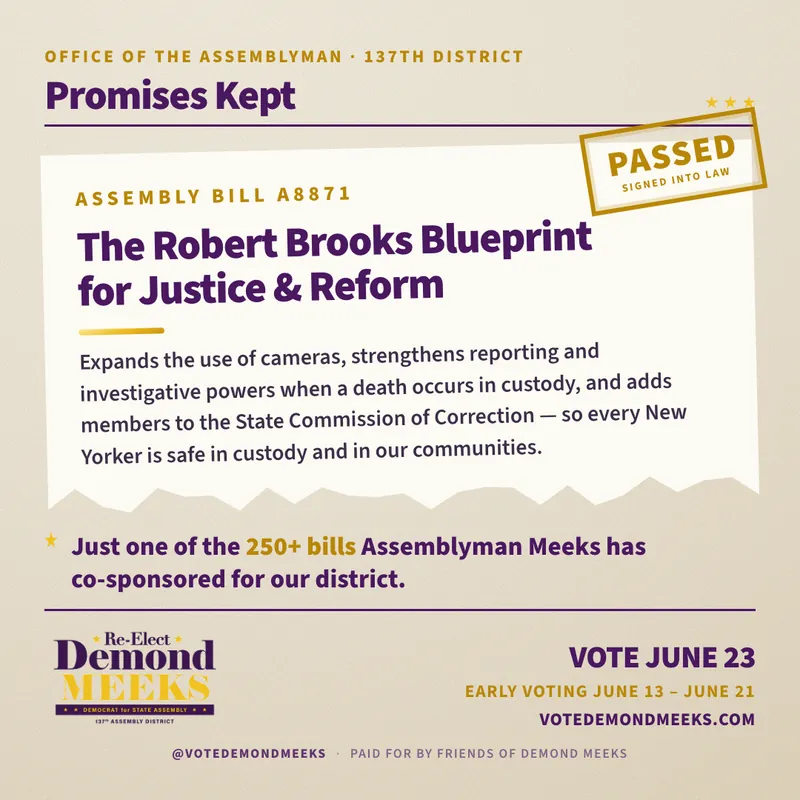
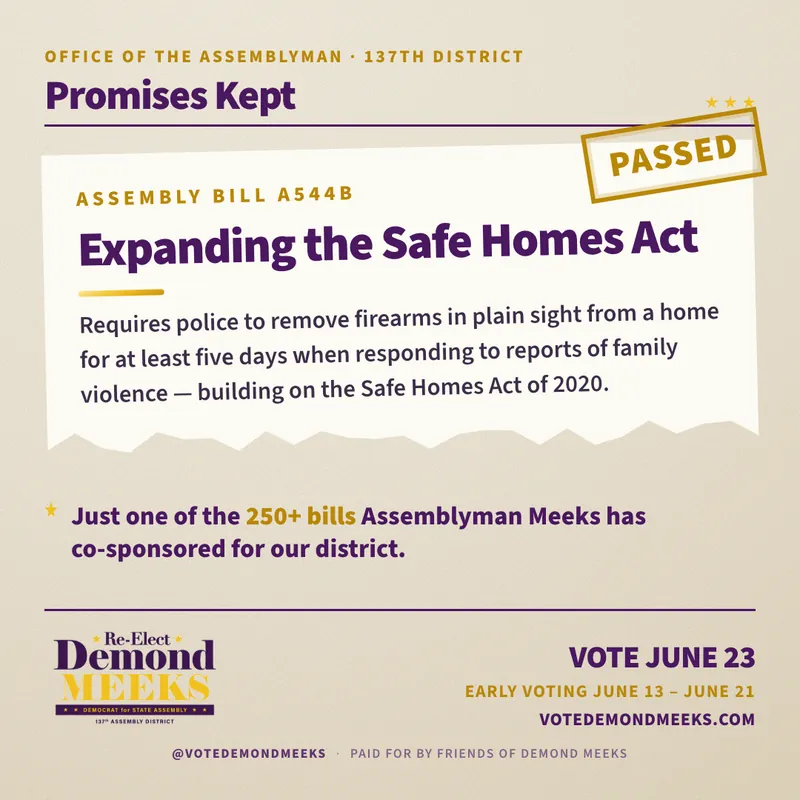
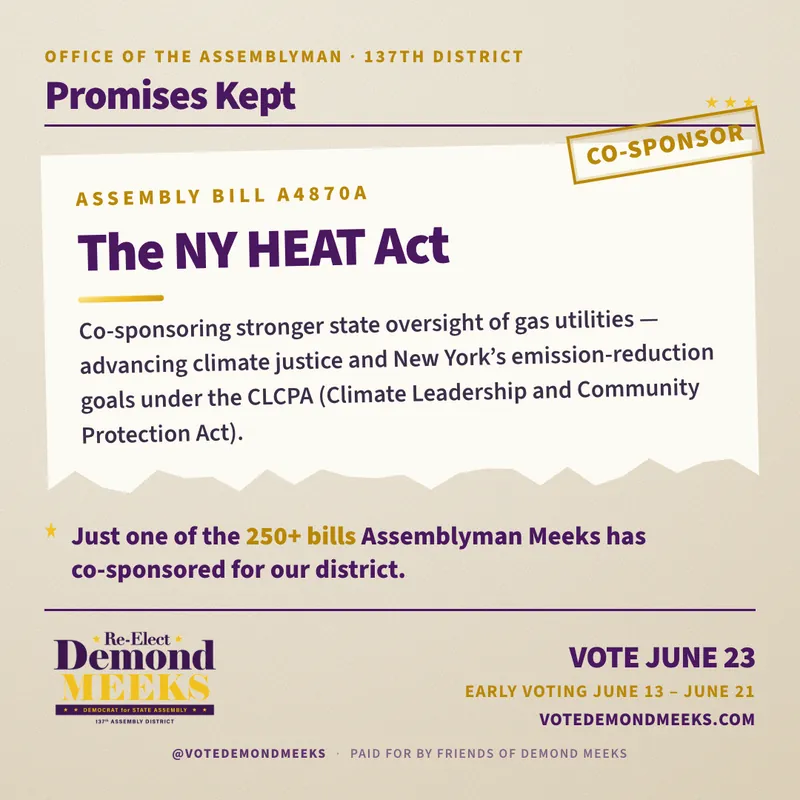
What works: Each ad is styled as a newspaper clipping about one bill, with the bill number, a plain-language summary, and a stamp showing its status. One template produced six ads, so a voter who sees several of them sees a different bill each time. Bills he co-sponsored are stamped Co-sponsor, not Passed.
Jen Lunsford: Introduction Ad
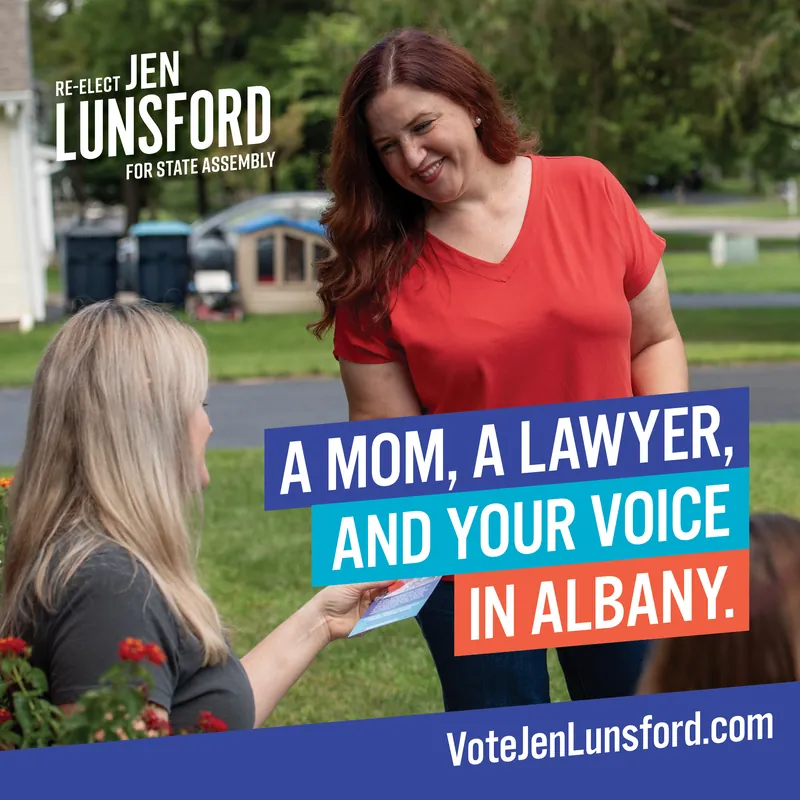
What works: The photo shows Jen talking with a voter at a door rather than posing for a portrait. The headline, “A mom, a lawyer, and your voice in Albany,” tells a voter who she is in one line, and the website address closes the ad for anyone who wants more.
Jen Lunsford: Endorsement Series
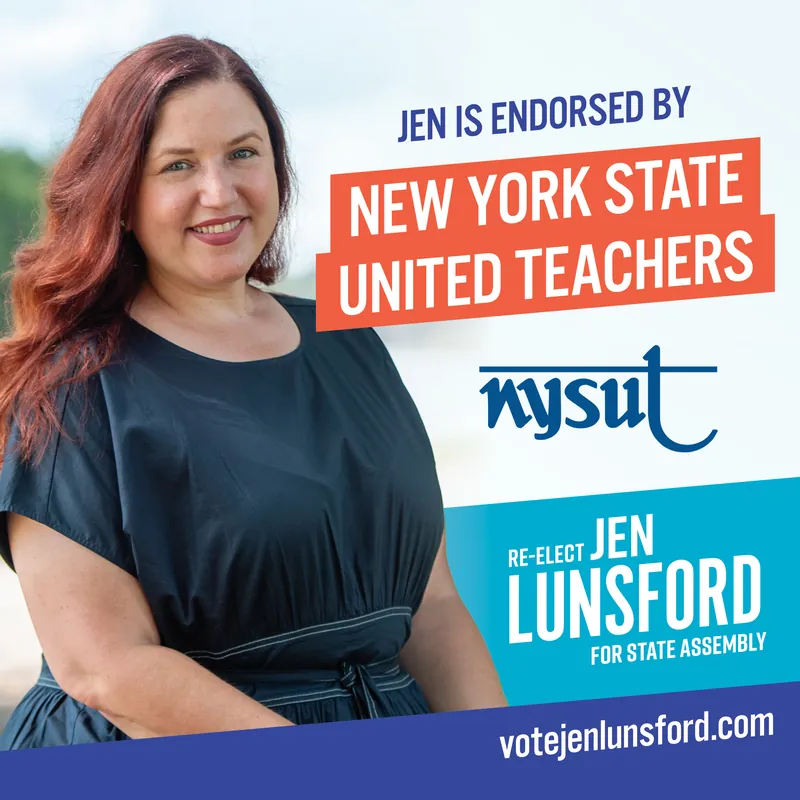
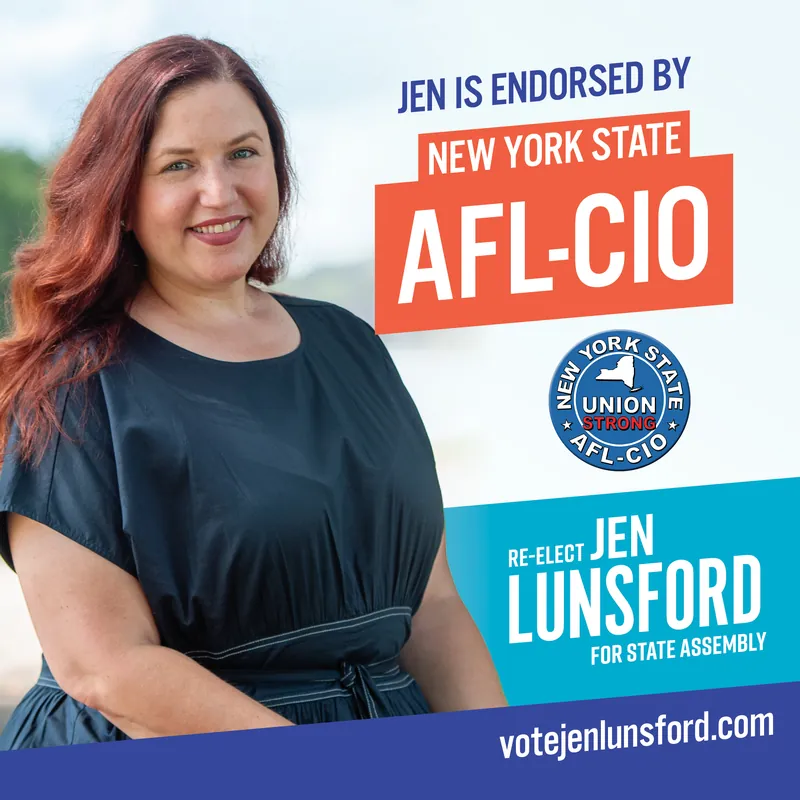
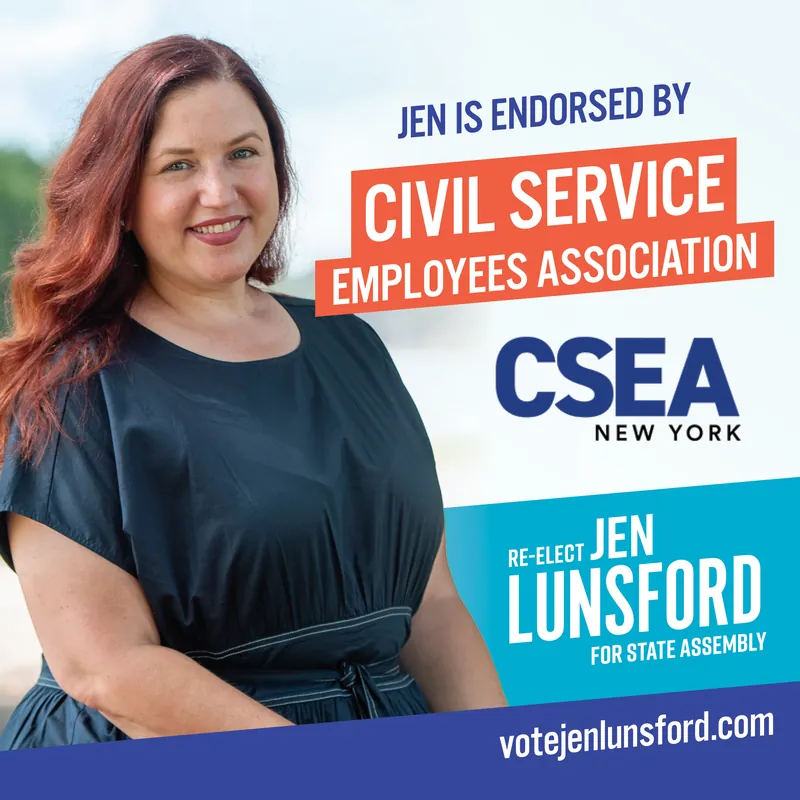
What works: Every endorsement uses the same layout: Jen on the left, the endorser's name as the headline, and the endorser's logo below it. With the template set, each new endorsement became a new ad by changing only the name and logo, and the nine ads read as one series.
Demond Meeks: Endorsement from a Colleague
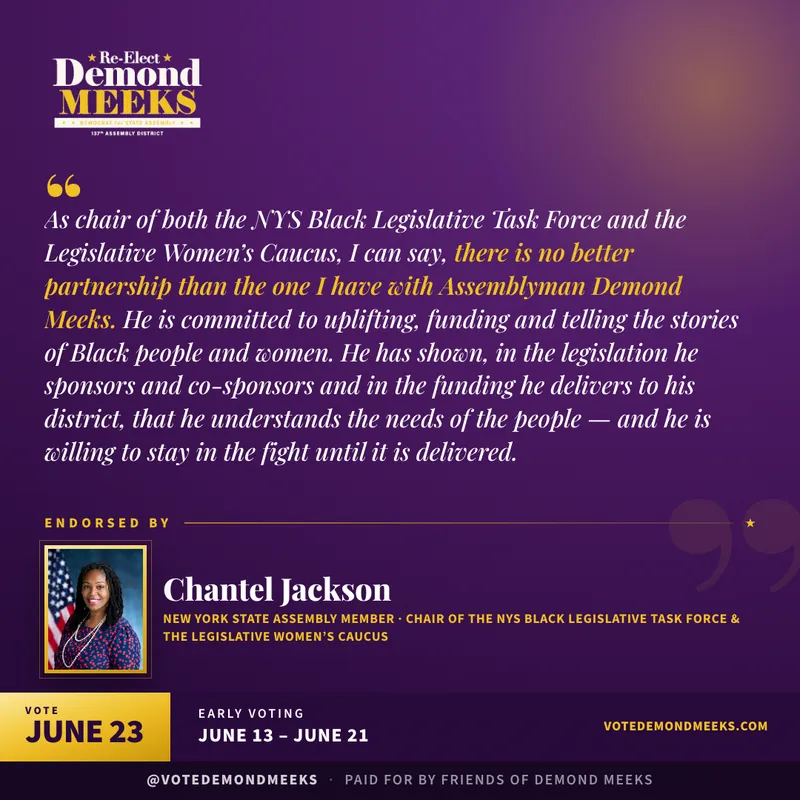
What works: The ad leads with Assemblymember Chantel Jackson's own words, set large, with her name, title, and photo below so the source is clear. A quote from a colleague in the Assembly adds a voice other than the campaign's own.
Jen Lunsford: Quote Ad
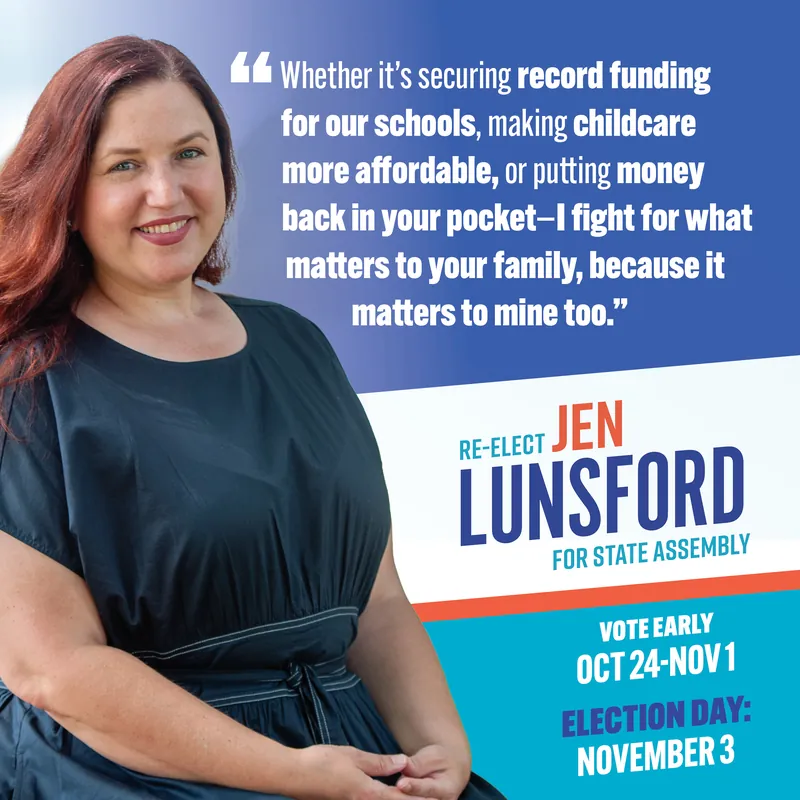
What works: Her own words on school funding, childcare, and affordability fill the top half, with her photo beside them. Early voting and Election Day dates sit in the lower corner, so the ad also works as a reminder.
Nate Salzman: Message Ad
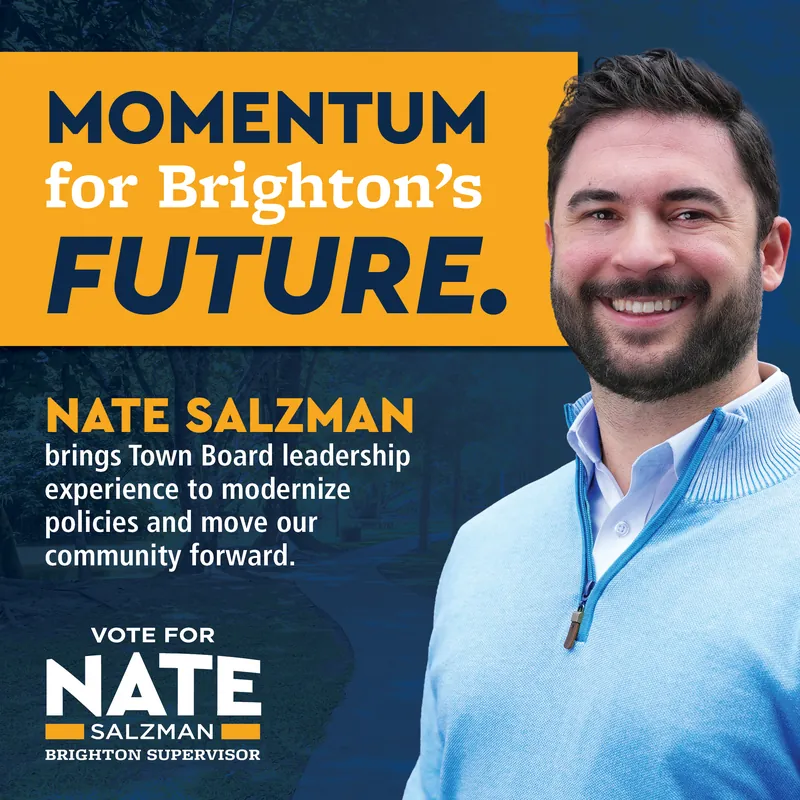
What works: A short headline in the campaign’s navy and gold, one sentence on what he brings to the job, and his logo in the corner. The photo is cropped close, so his face still reads at the size of a phone feed.
Early Voting and Election Day Reminders
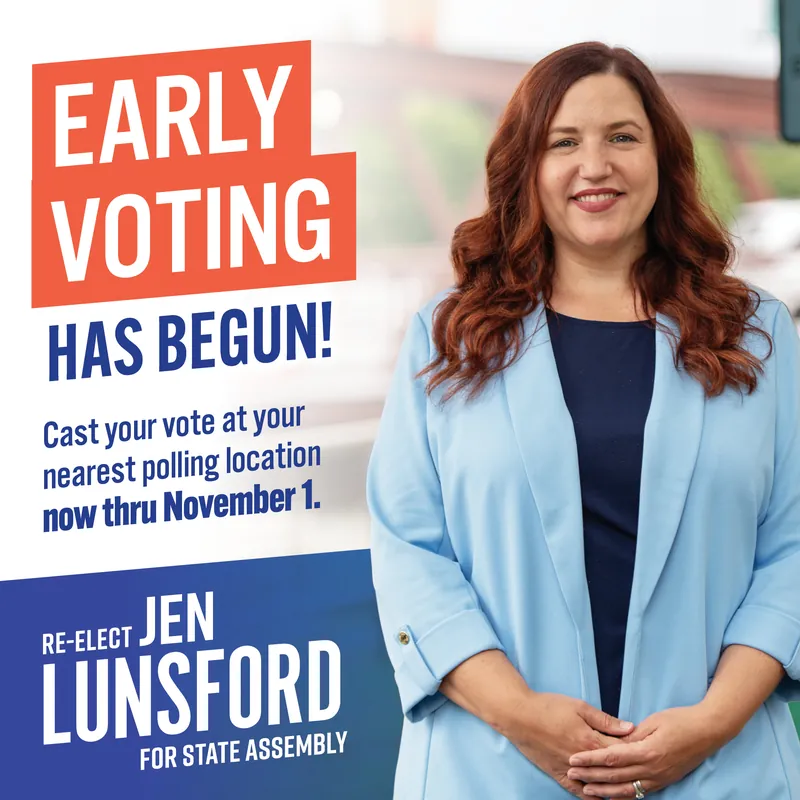
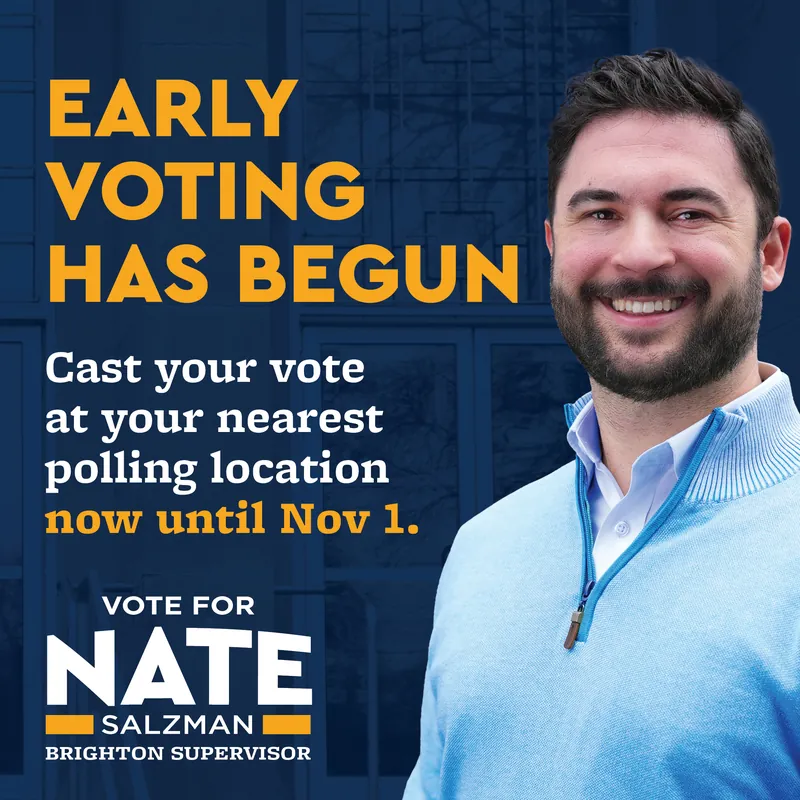
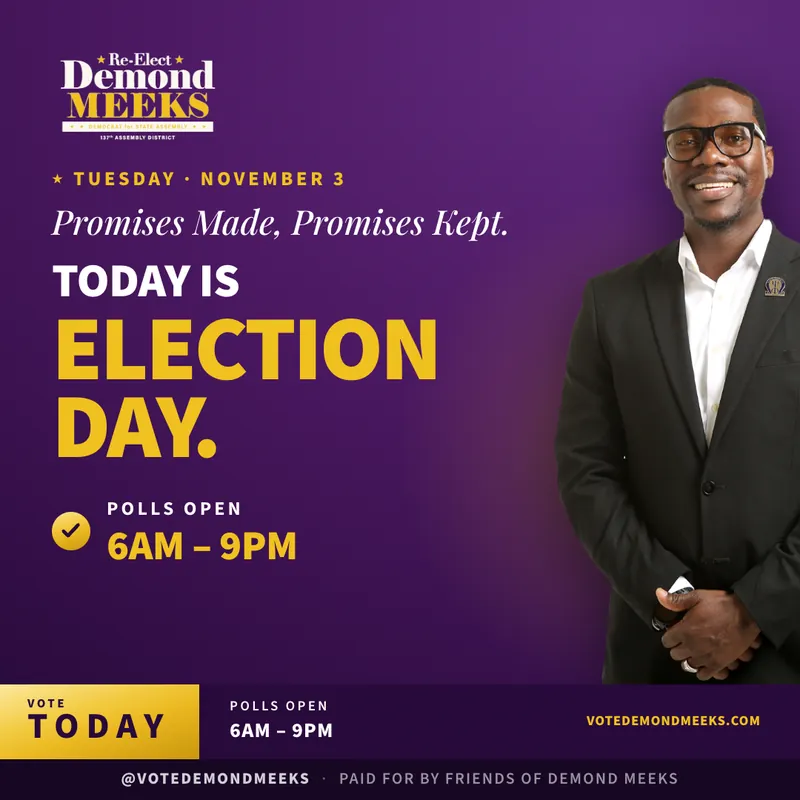
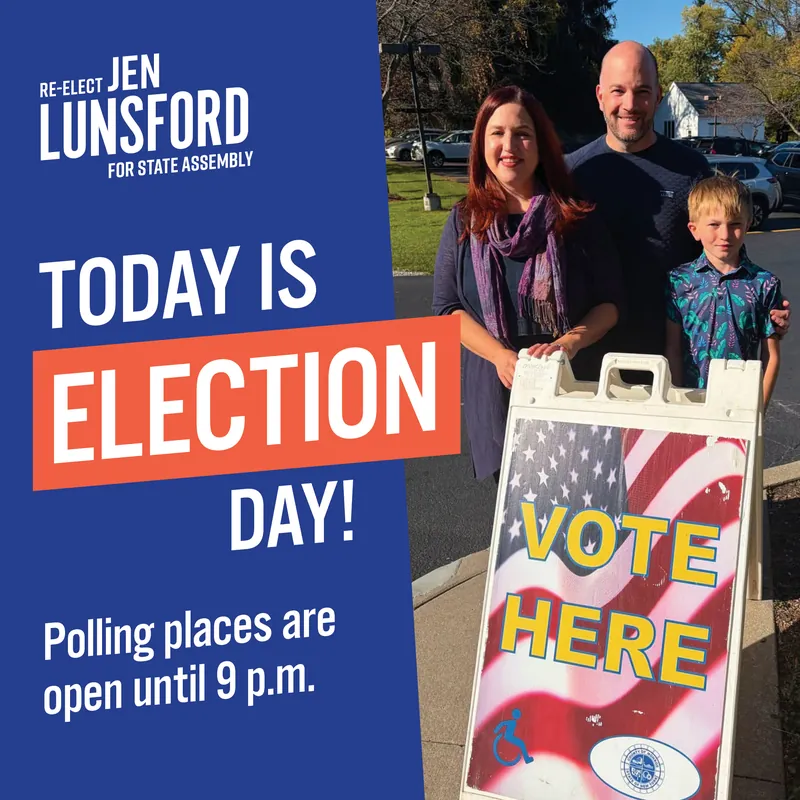
What works: Reminders are the simplest ads a campaign runs. In each of these, the action and the date are the largest type on the ad. Meeks's reminders from the primary were updated with general election dates rather than redesigned, and Lunsford's Election Day ad uses a family photo at a polling place sign.
Demond Meeks: Display Banners

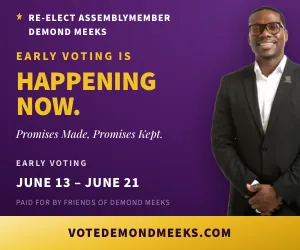
What works: The same campaign cut down to standard display sizes, so ads on news sites and apps match what voters saw on Facebook and Instagram. At these sizes there is room for the logo, one line, the dates, and the website, and the banners keep to that.
Political Social Ad Checklist: Before You Launch
- Meta authorization for ads about elections or politics, finished before you need ads running
- A paid-for-by disclaimer set up in Meta, and on the image where your state requires it
- Feed (1080 by 1080) and Stories and Reels (1080 by 1920) versions of each ad
- Text checked on an actual phone at feed size
- Dates updated for each election, primary and general
- Display sizes (300 by 250 and 728 by 90) if you also run programmatic display
- A website address or clear next step on every ad